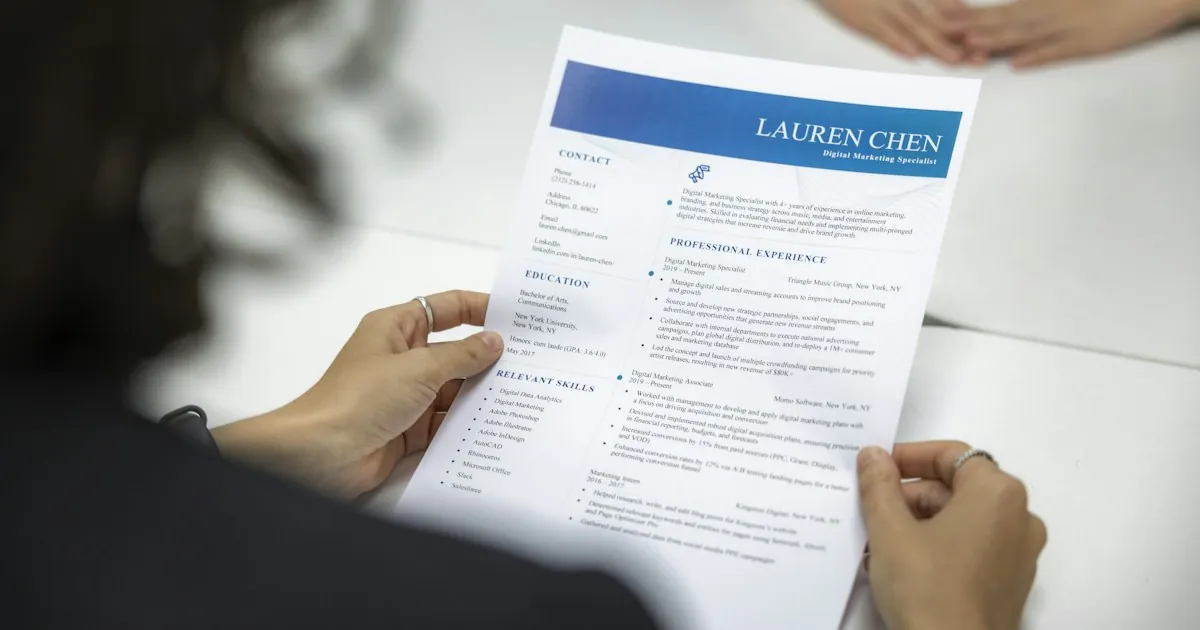
Key takeaways
- Write one strong base resume, then tailor a copy for each job you apply to.
- Use a simple, single-column layout so applicant tracking systems can read it.
- Lead each bullet point with an action and end it with a result, using numbers where you can.
- Keep it to one page unless you have 10 or more years of relevant experience.
A good resume does one job: it gets you an interview. It doesn't need to list everything you have ever done. It needs to show a hiring manager, quickly, that you can do the job they are hiring for.
This guide walks through every section of a resume, in the order you should write it, with examples you can adapt.
Choose a simple format
Most resumes are read twice: first by an applicant tracking system (ATS), the software employers use to collect and sort applications, then by a person. A simple layout works best for both.
- Use one column. Two-column layouts and text boxes can scramble the order of your content when an ATS reads them.
- Use standard section titles, such as Experience, Education and Skills, so both people and software find what they are looking for.
- Pick one readable font at 10 to 12 points, with clear spacing between sections.
- Save as PDF unless the job posting asks for a Word file.
Reverse-chronological order, with your most recent job first, is the format most recruiters expect. Use it unless you are changing careers or have large gaps to explain.
Start with your contact details
Put your name at the top, in a larger size, followed by one line of contact details:
- City and state (a full street address isn't needed)
- Phone number and a professional email address
- A LinkedIn profile or portfolio link, if it adds to your application
Write a short summary
A summary is two or three sentences at the top of your resume that say who you are, what you are good at and what you are looking for. It is the first thing a recruiter reads, so make it specific to the job.
For example, a registered nurse might write: "Registered nurse with 6 years of ICU experience and a track record of improving patient outcomes. Certified in critical care (CCRN) and skilled at leading rapid-response teams. Looking to bring calm, data-driven care to a Level I trauma center."
Avoid general phrases such as "hard-working team player". Name your field, your years of experience and one or two strengths that matter for this role.
Show your experience with results
Your experience section matters most. For each job, list your title, the company, the location and the dates, then three to six bullet points.
Strong bullet points follow a simple pattern: action + what you did + result. Start with a verb, say what you did, and finish with what changed because of it.
| Instead of | Write |
|---|---|
| Responsible for social media | Grew Instagram followers from 4,000 to 25,000 in 12 months by launching a weekly video series |
| Handled customer complaints | Resolved 40+ customer issues a week and raised satisfaction scores from 82% to 94% |
| Worked on the checkout page | Rebuilt the checkout flow, cutting abandoned carts by 18% |
If you don't have exact numbers, use honest estimates ("about 30 orders a day") or describe the scale ("for a team of 12"). A result without a number is still better than a duty.
List your skills
Add a short skills section with the tools, methods and certifications the job asks for. Read the job description and use the same words it uses, as long as they are true for you. This helps both the ATS and the recruiter see the match.
Group skills if you have many of them, for example Clinical skills, Software and Languages.
Add your education
List your degree, school and graduation year. Recent graduates can add a relevant GPA (3.5 or higher), honors and coursework. If you have several years of experience, keep this section short and put it after your experience.
Tailor your resume for each job
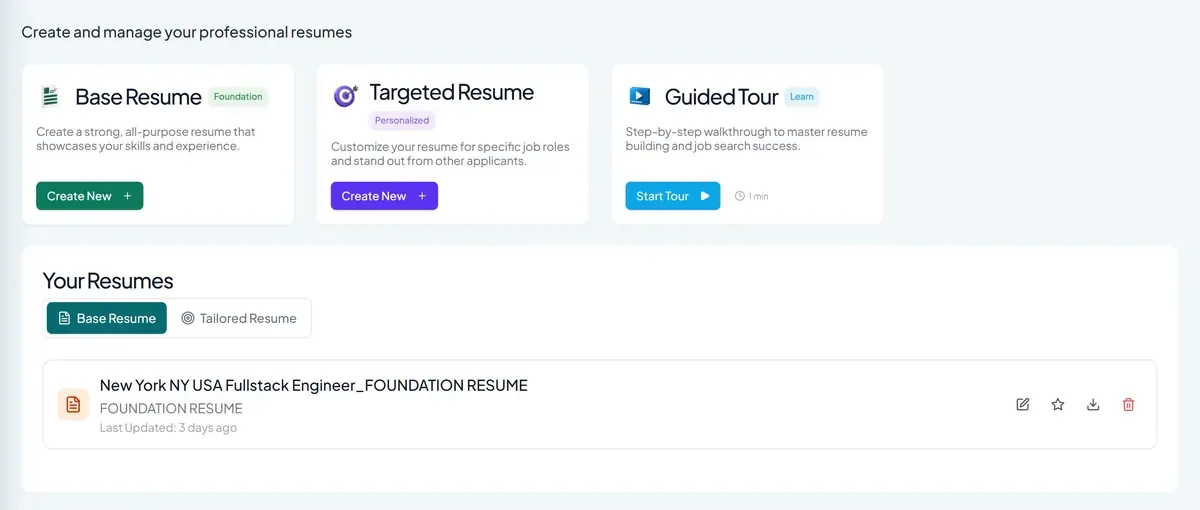
Sending the same resume to every job is the most common reason good candidates don't hear back. Keep one complete base resume, then make a tailored copy for each application:
- Read the job description and note the skills and results it asks for.
- Rewrite your summary for this role.
- Move your most relevant bullet points to the top of each job.
- Add the matching skills and keywords that you genuinely have.
Check it before you send it
Before you apply, read your resume one more time, ideally out loud:
- Fix every spelling and grammar mistake.
- Check that dates, titles and company names are correct and consistent.
- Make sure the file name is clear, such as Jane-Smith-Resume.pdf.
- Open the PDF on your phone to check that it is easy to read on a small screen.
A clear, tailored resume that shows results will get you more interviews than a long one that tries to say everything. Write your base resume once, keep it up to date, and spend a few minutes tailoring it every time you apply.
Frequently asked questions
How long should a resume be?
One page for most people. Two pages are fine if you have 10 or more years of relevant experience, or work in a field such as research or academia where longer resumes are expected.
Should I include a photo on my resume?
Not for jobs in the US. Most employers prefer resumes without photos, to keep hiring decisions focused on skills and experience.
How far back should my work history go?
Around 10 to 15 years is enough for most roles. Older jobs can be left out or listed briefly, without bullet points, if they are still relevant.
Do I need a different resume for every job?
You need a tailored version for every job, but not a new resume. Start from one base resume and adjust the summary, skills and the order of your bullet points to match each job description.